
Your gateway to African markets and the world
Itana Digital Free Zone is a digital special economic zone building for startups, digital businesses and service businesses.
 Licensed by NEPZA.
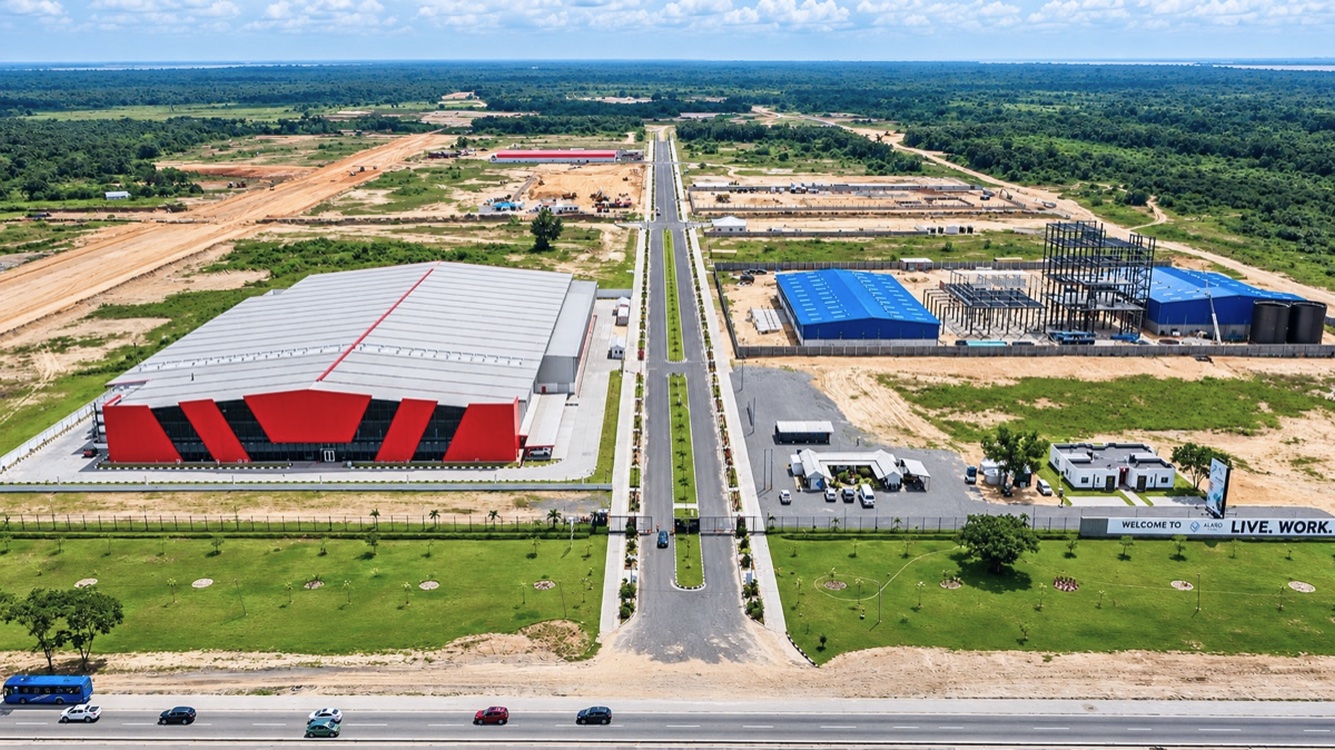
What is a free zone?
- A free zone (also known as a free trade zone or special economic zone) is a specific, fenced-in geographic area within a country where goods can be imported, stored, manufactured, processed, or re-exported with reduced or eliminated customs duties and simplified trade regulations.
- Under customs laws, areas inside a free zone are treated as being outside the standard domestic customs territory. Duties are typically deferred, reduced, or completely waived unless the goods cross out of the zone into the host country's regular domestic market.
- The goal is to help attract foreign direct investment, boost trade and manufacturing, increase job creation and economic growth.
- A digital free zone is a little different from a traditional free zone because it focuses on digital businesses that do not require a physical presence: businesses that export services outside the country or bring global services and capital into it.

How can it help you?
Knowing the best jurisdiction for you early in your journey can save you from a lot of legal issues and costs later on. A free zone enterprise might be able to help you if you export services digitally. Take our legal entity survey to find out the best setup for you.
The purpose is to let digital companies (like software developers, remote agencies, global tech startups, and online platforms) build products, serve international clients, earn foreign exchange, and raise global capital from within a home country (such as Itana) without having to move your legal entity or intellectual property offshore to Delaware or Dubai.
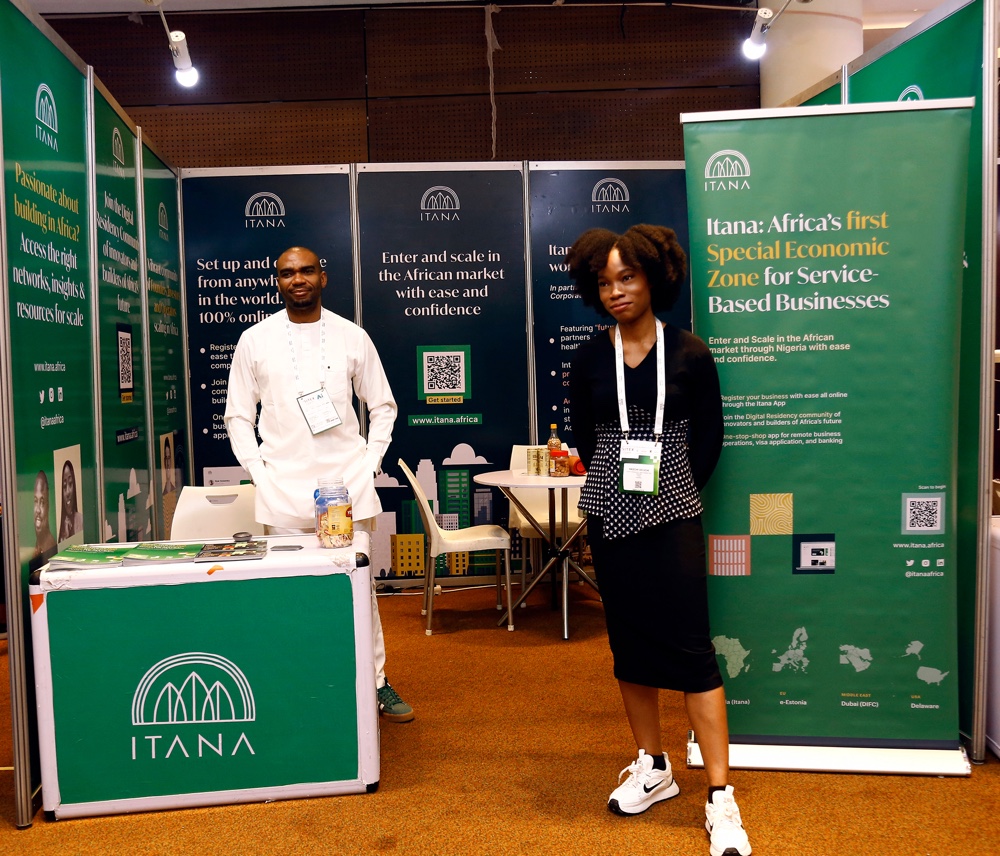
What if my business is in Nigeria primarily?
Free zones are not meant for doing primary business inside the domestic Nigerian customs territory.
If a company registered at Itana's free zone wants to sell its digital services or products domestically into the Nigerian customs territory, it can do that but loses the exclusive free-zone tax and regulatory exemptions for those local transactions, and standard domestic taxes (such as VAT and corporate income tax governed by the Federal Inland Revenue Service) apply to that local portion of the business.
What we aim to do is capture global tech export value, remote work for international clients, and foreign direct investment (FDI), rather than bypass taxes for local-market-facing domestic businesses.

Building for how Africa actually works

What other ecosystems assume,
and what Africa needs
| Delaware | Silicon Valley | Station F | |
|---|---|---|---|
| Assumes | Trust comes from a neutral jurisdiction. | The bottleneck is finding outliers and helping them build fast. | Putting everyone in one place creates collisions between talent, investors and support. |
| What we need to question | What is the African contextual version of a “trust container”? | What does acceleration actually look like for us? | What does our infrastructure need to look like to meet the needs of a distributed, multi-geo, multi-context ecosystem? |
| In Africa | Trust comes from relationships, community, reputation and networks: a track record that's visible and verifiable, with a way to enforce it. | Acceleration needs depth, not speed: operator-led programmes that focus on the density of support rather than compressing time. | Founders pay a “friction tax” on basics like electricity, security, internet and access to talent, across a distributed, multi-country ecosystem. |
| At Itana | We're developing trust mechanisms such as arbitration and dispute-resolution services for Free Zone Enterprises, which work much faster in the special economic zone. | Through Accelerate Africa, we have the traditional style accelerator, but will also be developing longer residency programmes in collaboration with corporate partners, to go deep on solving multi-billion dollar challenges. | A 20,000 sqm first-phase live-work-play campus, opening 2030, will be the place that eliminates the friction tax and increases the density of talent and support. |
What you get with Itana
Not speed, but depth.
Operator development programmes that focus on support density, rather than compressing time.
The campus removes the friction tax.
Electricity, security, internet and talent density are provided as basics, not as things each founder has to solve alone.
One ecosystem.
Arbitration and dispute resolution, Accelerate Africa's residency programmes, the campus and Coach.
The right structure for each part of your business
Combining a foreign parent with an Itana Free Zone Enterprise (FZE) and/or a Nigerian company creates a hybrid structure. It balances investor expectations, hard-currency revenue and local Naira operations.
Dual structure
Parent + Itana FZE
Best for SaaS, digital exports, fintech and cross-border services.
Read the detail
Best for software-as-a-service (SaaS), digital exports, fintech, and cross-border tech services where all revenue is billed in hard currency or exported out of Nigeria. The foreign parent licenses IP to the Itana FZE (or owns it outright), and the Itana FZE employs local engineering talent without expatriate quotas.
Tripartite structure
Parent + Itana FZE + Local Nigerian Ltd
Best when local Naira revenue or regulated local clients require a CAC entity.
Read the detail
Required if you sell heavily to local Nigerian enterprises, traditional brick-and-mortar clients, or regulated sectors that mandate a local Corporate Affairs Commission (CAC) entity. The Itana FZE acts as the regional/tech core, while a commercial service agreement or transfer pricing arrangement links it to the local CAC entity for domestic Naira billing.
The Itana-Top model
Itana FZE + Nigerian Ltd
Best for bootstrapped or Africa-focused startups that do not need a US parent.
Read the detail
Best for bootstrapped or Africa-focused startups that do not require a US entity for fundraising. The Itana FZE acts as the primary holding company, owning the Intellectual Property (IP) and holding equity in a domestic Nigerian Ltd for local market execution.
Other: parent + CAMA or another country's local entity.
Where the money lands
7.5% VAT on local sales; 30% corporate income tax on net local profit, unless the small-business rate applies.
0% corporate income tax and 0% VAT on qualifying exports; multi-currency banking.
0% Nigerian withholding tax on dividends; intercompany service and licensing fees must be arm's-length.
Revenue
International clients pay the FZE in hard currency. Local Nigerian clients pay the CAC Ltd in Naira.
Expenses
A service agreement funds local operations; licensing and technical-support fees can flow back to the FZE.
Tax and repatriation
Qualifying exports keep the FZE incentives. Local profits are taxed onshore. Capital and profits can be repatriated.
Which entity is right for you? Take the brief survey and we will suggest the optimal structure for your business. Always consult a legal professional to support you.
Take the legal entity surveyThe detail: revenue, expenses and tax
Revenue flow
Global and pan-African revenue: foreign clients and enterprise customers across Africa pay in hard currency (USD/GBP) directly into the Itana FZE multi-currency bank account or the foreign parent.
Local Nigerian revenue: onshore customers pay in Naira into the Nigerian CAC Ltd. Under the Nigeria Tax Act, if your Itana FZE sells directly into the Nigerian customs territory, those domestic sales must stay below 25% of total revenue to preserve your full free zone tax exemptions. Routing local sales through a separate CAC Ltd keeps your FZE completely insulated.
Expense flow (transfer pricing)
Funding local operations: the foreign parent or Itana FZE signs an Intercompany Service Agreement with the Nigerian CAC Ltd. The FZE pays the CAC Ltd a monthly fee (typically structured as actual local expenses plus a 5% to 10% arm's-length markup) to cover Naira payroll, local contractors and office overhead.
Software and IP licensing: if the Nigerian CAC Ltd generates substantial local Naira profit, it can pay a tax-deductible licensing or technical support fee back up to the Itana FZE or foreign parent for using the core software platform.
Separate accounting: you must maintain strictly separated financial books for the Itana FZE and the domestic CAC Ltd to prove which revenues are tax-exempt.
Tax and capital repatriation
Inside the Itana FZE: qualifying export activities enjoy 0% Corporate Income Tax, 0% Value Added Tax (VAT), and 0% import duties on equipment.
Repatriating profits: you can move 100% of your capital and profits out of the Itana FZE to your foreign parent with 0% Nigerian withholding tax on dividends. Once dividends arrive at your foreign parent, they may be subject to home-country tax rules.
Inside the Nigerian CAC Ltd: standard onshore rules apply. The company charges 7.5% VAT on local sales and pays 30% Corporate Income Tax on net local profits (unless annual turnover is ₦100 million or less with fixed assets under ₦250 million, which qualifies for a 0% small-business rate).
When to use a 2-entity setup (parent + Itana FZE): choose this simpler model if your startup builds software or provides digital services for global and pan-African clients, bills in USD or GBP, and hires Nigerian remote talent without selling locally in Naira.
When to use a 3-entity setup (parent + Itana FZE + CAC Ltd): add the onshore CAC Ltd only when local Nigerian Naira revenue, local enterprise procurement, or onshore regulatory compliance justifies the extra accounting and legal overhead.
General information only, not legal or tax advice. Structure and tax treatment depend on your activity and current law; confirm them with a qualified adviser.
What an FZE licence gives you
What we have now
- Register and manage your FZE digitally.
- Visa support.
- Hire and onboard international talent with a CERPAC.
What we partner with others for
- Set up an international bank account.
What is in progress
- Protect your IP, copyright and trademarks.
- Create an SPV as an angel investor or founder.
- Register easily in other zones across Africa.
- Use registered agent and office services.
From application to operations
Apply on Coach
Submit your application and incorporation fee. Your account manager confirms the documents; initial review usually takes 24 hours.
Due diligence and approval
Complete KYC and business checks. If eligible, your application is submitted to NEPZA.
Incorporate and activate
After approval, receive your registration certificate and NEPZA licence. Banking, platform access and visa support follow.

What it costs
$2,000
first year
Annual renewal: $1,150.
What's included
- Company incorporation in the zone.
- Multi-currency banking setup support.
- Customs and visa processing support.
- Tax-incentive access and professional-services discounts.
- Dedicated account manager and priority campus space.
Common questions
Is Itana accepting applications?
Yes. Itana is licensed by NEPZA and is accepting applications. The Free Zone page sets out the current process and pricing. To start, apply through Coach or talk to the team.
How do I obtain the Itana Business License?
The process to set up a Free Zone Enterprise in Itana is as follows:
- Complete the application form and make a payment. Then, you'll get an email confirmation from us.
- We'll set up a call to learn more about your business and collect information about your leadership team, shareholding information, and KYC.
- Complete legal registration documents and business plan (we'll provide easy-to-use templates)
- We'll work with NEPZA to complete the process and obtain your official Business Registration Certificate and Operating License.
How long will it take to register a company in the Itana Free Zone?
Initial review usually takes 24 hours. After approval, incorporation and the certificate can follow within 48 hours. Timelines depend on the documents and NEPZA.
How much does it cost to register a business in Itana?
The Free Zone Enterprise licence costs $2,000 in the first year. Annual renewal is $1,150.
The fee covers company incorporation in the zone, multi-currency banking setup support, customs and visa processing support, tax-incentive access, professional-services discounts and a dedicated account manager.
How do taxes work in the Itana Free Zone?
Qualifying free-zone activities may benefit from 0% corporate income tax, 0% VAT and 0% import duties on equipment. Domestic sales into the Nigerian customs territory are treated differently and must stay below 25% of total revenue to preserve full free-zone exemptions.
This is general information, not tax or legal advice. Confirm your position with a qualified adviser.
Can I open a bank account for my registered Free Zone Enterprise (FZE)?
Yes, after obtaining the FZE certificate and operating license, we will coordinate with our bank partner to help you open a bank account. In the process, we may ask for your permission to share some of your information with the bank.
Can I get a Business Visa to Nigeria through Itana?
Yes, if you’d like to get a Business Visa for your employees or invitees of an FZE registered with Itana, you can send us a message at support@itana.africa
You can apply for and obtain a Subject-to-regularisation (STR) business visa at the Nigerian Embassy or High Commission in your country of residence or birth. This application will include a letter of introduction from the Free Zone Authority, an application letter by the Employer requesting the approval of the STR and accepting the responsibility of the foreign national, along with the application fee (which varies depending on the country).
The STR Visa is valid for 3 months from the date of arrival in Nigeria and must be regularised by obtaining a Combined Expatriate Residence Permit and Aliens Card (CERPAC), within that period. A CERPAC application will be to the Nigerian Immigration Service through the Zone Administrator/NEPZA, including the STR package from the Embassy, the STR Visa and the International passport. CERPAC is valid for a year (2 years in some cases) and is renewed annually. The process typically takes 3-4 weeks.
Alternatively, you can apply for a Temporary Work Permit visa (to provide specialised skilled services) or a Business Visa (for businesspersons or investors coming for business meetings or prospecting for opportunities), valid for 90 days. There is also a Visa-on-Arrival option for business travellers.
Find the right place to start.
Explore the application process and costs for setting up in the Free Zone.